




 del.icio.us
 Digg
Digg Facebook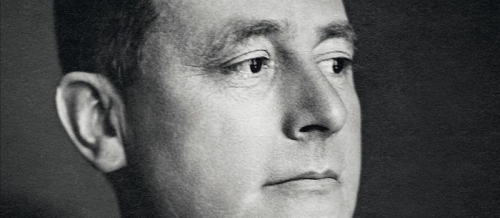



Before World War II liberal rights were understood among Western states in a libertarian and ethno-nationalistic way. Freedom of association, for example, was understood to include the right to refuse to associate with certain members of certain ethnic groups, even the right to discriminate in employment practices. This racial liberalism was still institutionalized right up until the 1960s. The settler nations of Australia, Canada, United States, and New Zealand enjoyed admission and naturalization policies based on race and culture, intended to keep these nations “White.”
This liberal racial ethos was socially accepted with a good conscience throughout Western society. As Robert H. Jackson has observed:
Before the war prevailing public opinion within Western states — including democratic states — did not condemn racial discrimination in domestic social and political life. Nor did it question the ideas and institutions of colonialism. In the minds of most Europeans, equality and democracy could not yet be extended successfully to non-Europeans. In other words, these ideas were not yet considered to be universal human rights divorced from any particular civilization or culture. Indeed, for a century or more race had been widely employed as a concept to explain the scientific and technological achievements of Europeans as compared to non-Europeans and to justify not only racial discrimination within Western states but also Western domination of non-western peoples. Racial distinctions thus served as a brake on the extension of democratic rights to people of non European descent within Western countries as well as in Western colonies. [Robert H. Jackson, “The Weight of Ideas in Decolonization: Normative Change in International Relations,” In Ideas and Foreign Policy: Beliefs, Institutions and Political Change, ed. Goldstein and Keohane, Cornell University Press, 1993, p. 135]
Even in the case of denazified Germany, governments after 1945 endorsed, as a matter of common sense, and well into the 1970s, an ethnic conception of German nationality, accepting migrants only as temporary “guest workers” on the grounds that Germany was “not an immigrant country.” European nations took for granted the ethnic cohesion of their cultures and the necessity of barring the entry and incorporation of people from different cultures categorized as a threat to the “national character.”
Why, then, did the entire Western liberal establishment came to the view that European ethnocentrism was fundamentally at odds with liberal principles a few decades after WWII?
I argued in a paper posted at CEC over a month ago (which I have withdrawn because it was flawed) that a new set of norms (human rights, civic nationalism, race is a construct) with an in-built tendency for further radicalization suddenly came to take a firm hold over Western liberal nations in response to the Nazi experience, and that once these norms were accepted, and actions were taken to implement them institutionally, they came to “entrap” Westerners within a spiral that would push them into ever more radical policies that would eventually create a situation in which Western nations would come to be envisioned as places always intended to be progressing toward a future utopia in which multiple races would co-exist in a state of harmony.
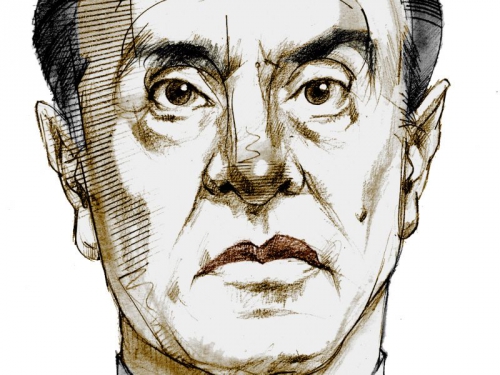
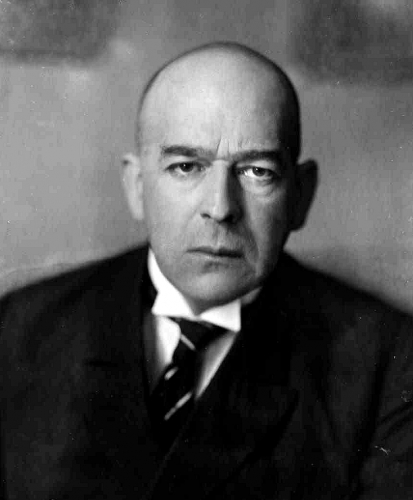
Carl Schmitt
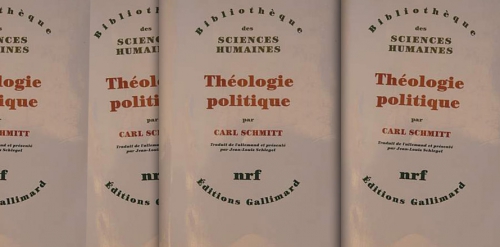
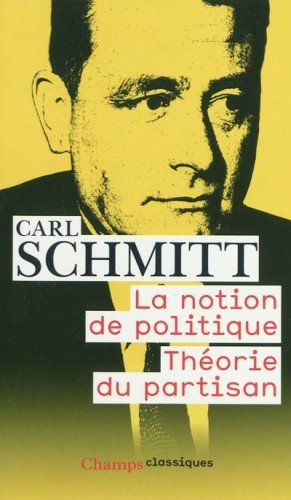
Was there something within the racialist liberalism of the pre-WW II era that made it susceptible to the promulgation of these norms and their rapid radicalization thereafter? Why did Western leaders succumbed to the radicalization of these norms so easily? The answer may be found in Carl Schmitt’s argument [2] that liberal states lack a strong concept of the political. I take this to mean that liberals leaders have an inherent weakness as political beings due to their inability to think of their nation states as a collectivity of people laying sovereignty claim over a territory that distinguishes between friends and enemies, who can belong and who cannot belong in the territory. Liberals believe that their nation states are associations formed by individuals for the purpose of ensuring their natural right to life, liberty, and happiness. They have an imaginary view of their liberal states as associations created by isolated individuals reaching a covenant, a contract or agreement, amongst themselves in abstraction from any prior community. They have a predilection to whitewash the fact that their liberal states, like all states, were forcibly created by a people with a common language, heritage, racial characteristics, religious traditions, and a sense of territorial acquisition involving the derogation of out-groups.
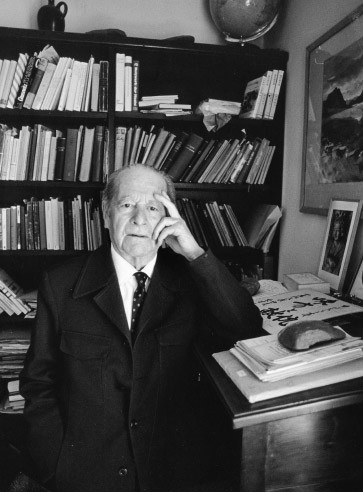 For this reason, in the words of Carl Schmitt, liberals have an undeveloped sense of the political, an inability to think of themselves as members of a political entity that was created with a clear sense of who can belong and who cannot belong in the community. Having a concept of the political presupposes a people with a strong sense of who can be part of their political community, who can be friends of the community and who cannot be because they pose a threat to the existence and the norms of the community.
Liberals tend to deny that man is by nature a social animal, a member of a collective. They think that humans are all alike as individuals in wanting states that afford them with the legal framework that individuals need in the pursuit of liberty and happiness. They hold a conception of human nature according to which humans can avoid deadly conflict through a liberal state which gives everyone the possibility to improve themselves and society through market competition, technological innovation, and humanitarian works, creating an atmosphere in which political differences can be resolved through peaceful consensus by way of open deliberation.
They don’t want to admit openly that all liberal states were created violently by a people with a sense of peoplehood laying sovereign rights over an exclusive territory against other people competing for the same territory. They don’t want to admit that the members of the competing outgroups are potential enemies rather than abstract individuals seeking a universal state that guarantees happiness and security for all regardless of racial and religious identity. Humans are social animals with a natural impulse to identify themselves collectively in terms of ethnic, cultural and racial markers. But today Europeans have wrongly attributed their unique inclination for states with liberal constitutions to non-Europeans. They have forgotten that liberal states were created by a particular people with a particular individualist heritage, beliefs, and religious orientations. They don’t realize that their individualist heritage was made possible within the context of states or territories acquired through force to the exclusion of competitors. They don’t realize that a liberal state if it is to remain liberal must act collectively against the inclusion of non-Europeans with their own in-group ambitions.
Hegel, Hobbes, and Schmitt
But I think that Schmitt should be complemented with Hegel’s appropriation of the ancient Greek concept of “spiritedness.” Our sense of honor comes from our status within our ethnocultural group in our struggle for survival and competition with other groups [4]. This is the source of what the ancient Greeks called “spiritedness,” that is a part of the soul comprising, in Plato’s philosophy, pride, indignation, shame, and the need for recognition. Plato believed that the human soul consisted of three parts:
- a physically desiring part that drives humans to seek to satisfy their appetites for food, comfort, and sensual pleasure;
- a reasoning part that allows humans to calculate the best way to get the things they desire; and
- a “spirited” part that drives humans to seek honor and renown amongst their people.
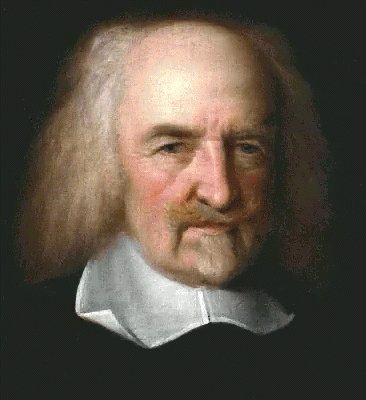
Liberal theory developed in reaction to the destructive tendency inbuilt into the spirited part which was exemplified with brutal intensity during the Thirty Years War (1618-1648) and English Civil War 1642-1651). Thomas Hobbes devalued the spirited part of man as just another appetite for power, for riches, and adulation. At the same time, he understood that this appetite was different from the mere natural appetites for food and sensual pleasure, in that they were insatiable and conflict-oriented.
State of nature according to Hobbes
Hobbes emphasized the destructive rather than the heroic character of this aspect of human nature. In the state of nature men are in constant competition with other men for riches and honor, and so enmity is a permanent condition of the state of nature, killing, subduing, and supplanting competitors. However, Hobbes believed that other aspects of human nature, namely, the instinct for self-preservation, fear of death and desire for “commodious living,” were more powerful passions among humans, and that it was these passions, the fear of death in particular, which eventually led men to agree to create a strong central authority that would end the war of competing megalomaniacs, and maintain the peace by monopolizing the means of violence and agreeing to ensure the secure pursuit of commodious living by all. The “insatiable desire and ambition of man” for power and adulation would henceforth be relegated to the international sphere.
But by the second half of the seventeenth century Hobbes’s extreme pessimism about human nature gradually gave way to more moderate accounts in which economic self interest in the market place, love of money, as calculated and contained by reason, would come to be seen as the main passion of humans. The ideal of the spirited hero striving for honor and glory was thoroughly demeaned if not denounced as foolish. By the eighteenth century money making was viewed less as avaricious or selfish and more as a peaceful passion that improves peoples’ manners and “makes for all the gentleness of life.” As Montesquieu worded it, “wherever there is commerce, there the ways of men are gentle.” Commerce, it was indeed anticipated, would soften the barbaric ways of human nature, their atavistic passions for glorious warfare, transforming competition into a peaceful endeavour conducted by reasonable men who stood to gain more from trade than the violent usurpation of other’s peoples property.
 Eventually, liberals came to believe that commerce would, in the words expressed by the Scottish thinker William Robertson in 1769, “wear off those prejudices which maintain distinction and animosity between nations.” By the nineteenth century liberals were not as persuaded by Hobbes’s view that the state of nature would continue permanently in the international relationships between nations. They replaced his pessimistic argument about human nature with a progressive optimism about how humans could be socialized to overcome their turbulent passions and aggressive instincts as they were softened through affluence and greater economic opportunities. With continuous improvements in the standard of living, technology and social organization, there would be no conflicts that could not be resolved through peaceful deliberation and political compromise.
The result of this new image of man and political relations, according to Schmitt, was a failure on the part of liberal nations to understand that what makes a community viable as a political association with sovereign control over a territory is its ability to distinguish between friends and enemies, which is based on the ability to grasp the permanent reality that Hobbes understood about the nature of man, which is that humans (the ones with the strongest passions) have an insatiable craving for power, a passion that can be held in check inside a nation state with a strong Leviathan ruler, but which remains a reality in the relationship between nations. But, whereas for Hobbes the state of nature is a war between individuals; for Schmitt one can speak of a state of war between nations as well as between groups within a nation. Friends and enemies are always groupings of people. In our time of mass multicultural immigration we can see clearly how enemy groups can be formed inside a national collectivity, groups seeking to undermine the values and the ethnic character of the national group. Therefore, to have a concept of the political is to be aware, in our multicultural age, of the possibility that enemy outgroups can emerge within our liberal nations states; it is to be aware that not all humans are equally individualistic, but far more ethnocentric than Europeans, and that a polity which welcomes millions of individuals from collectivist cultures, with a human nature driven by the passions for power and for recognition, constitute a very dangerous situation.
It was Hegel, rather than Hobbes, who spoke of the pursuit of honor instead of the pursuit of riches or power for its own sake, as the spirited part of human nature, which is about seeking recognition from others, a deeply felt desire among men to be conferred rightful honor by their peers. We can bring this Hegelian insight into Schmitt to argue that the spirited part of the soul is intimately tied to one’s sense of belonging to a political community with ethno-cultural markers. Without this spirited part members of a community eventually lose their sense of collective pride, honor, and will to survive as a political people. It is important to understand that honor is all about concern for one’s reputation within the context of a group. It is a matter of honor for immigrants, the males in the group, to affirm their heritage regardless of how successful they may be economically. Immigrants arriving in large numbers are naturally inclined to establish their own ethnic groupings within Western nations rather than disaggregate into individual units, contrary to what liberal theory says.
Non-White ethnic groupings stand as “the other,” “the stranger,” to use Schmitt’s words, in relation to nations where Europeans still constitute the majority. The friend-enemy distinction, certainly “the Us versus Them” distinction, can be applied to the relation between non-White ethnic groupings and European national groupings in the degree to which the collective actions of non-European groups negates the heritage and overall way of life of the majority European population. Ethnic groupings that negate the way of life of European liberal nations must be repulsed if European nations are to preserve their “own form of existence.” To be cognizant of this reality is what it means to have a concept of the political in our current age of mass immigration. It does not mean that alien groupings are posing an immediate physical threat. Enemy groupings may also emerge as a major force through sheer demographic growth in a seemingly peaceful atmosphere, leading to all sorts of differences over voting patterns, accumulation of wealth and resources, ethnic hierarchies, divergent customs and religious practices, that become so pervasive that they come to threaten the way of life of the founding peoples, polarizing the nation into US versus Them.
The Leftist Interpretation of Schmitt is Wrong
But don’t Western liberals have enemies? Don’t they believe, at least many Republicans, that Islamic radicals, and nations openly opposed to “Western values,” are enemies of liberalism, against whom military violence may be used when necessary, even if Republicans negate the political in the sense that they want to bring about a situation in which humans define themselves as economic agents, or as moral crusaders dedicated to “democratic” causes? Don’t multicultural liberals believe that opponents of multiculturalism and mass immigration in Western countries are “deplorable” people who must be totally marginalized as enemies of humanity?
Academics on the left have indeed appropriated Schmitt to argue that right wing liberals have not negated the political but simply produced a highly effective smokescream over the West’s ambition to impose an American-led corporate order in the world nicely wrapped with human rights for everyone. They see Schmitt as someone who can teach us how to remove the smokescream of “democracy,” “human rights,” and “economic liberty” from Western hegemony, exposing the true power-seeking intentions behind the corporate liberal elites.
It seems to me that this appropriation of Schmitt is seriously flawed. Of course, Schmitt did not say that liberal nations as such are utterly devoid of any political existence, and of a concept of the political, since the very existence of a state supposes a sovereign right over a territory. A complete denial of the political would amount to a denial of the existence of one’s state. It is also true that for Schmitt “what has occurred [in liberal nations] is that economics has become political” in the enormous power that capitalist firms have, and in the way liberal states seek to augment, through non-economic means, their market share across the world. More than this, Schmitt emphasized how liberal states have “intensified” the enemy-friend distinction by ostracizing as enemies any state or political group disagreeing with their conception of humanity and conceptualizing liberal aggression against illiberal nations as final wars to end all wars.
There is no question, however, that Schmitt’s central thesis is that liberalism has no concept of the political and that it lacks a capacity to understand the friend-enemy distinction. Liberals believe that the “angelic” side of humans can manifest itself through proper liberal socialization, and that once individuals practice a politics of consensus-seeking and tolerance of differences, both inside their nations and in their relationships with other liberal nations, they will learn to avoid war and instead promote peaceful trade and cultural exchanges through commercial contracts, treaties, and diplomacy. Even though liberal states have not been able to “elude the political,” they have yet to develop theories of the political which apprehend this sphere of human life in terms of its defining aspect, the friend-enemy distinction. Rather, liberal theorists are inclined to think of the state as one pressure group among a plurality of political groups all of which lack a concept of the political in thinking that differences between groups can be handled through institutions that obtain consensus by means of neutral procedures and rational deliberation.
 The negation of the political is necessarily implicit in the liberal notion that humans can be defined as individuals with natural rights. It is implicit in the liberal aspiration to create a world in which groups and nations interact through peaceful economic exchanges and consensual politics, and in which, accordingly, the enemy-friend distinction and the possibility of violence between groups is renounced. The negation of the political is implicit in the liberal notion of “humanity.” The goal of liberalism is to get rid of the political, to create societies in which humans see themselves as members of a human community dedicated to the pursuit of security, comfort and happiness. Therefore, we can argue with Schmitt that liberals have ceased to understand the political insomuch as liberal nations and liberal groups have renounced the friend-enemy distinction and the possibility of violence, under the assumption that human groups are not inherently dangerous to each other, but can be socialized gradually to become members of a friendly “humanity” which no longer values the honor of belonging to a group that affirms ethno-cultural existential differences. This is why Schmitt observes that liberal theorists lack a concept of the political, since the political presupposes a view of humans organized in groupings affirming themselves as “existentially different.”
Thus, using Schmitt, we can argue that while Western liberal states had strong ethnic markers before WWII/1960s, with immigration policies excluding ethnic groupings deemed to be an existential threat to their “national character,” they were nevertheless highly susceptible to the enactment of norms promoting the idea of civic identity, renouncing the notion that races are real, romanticizing Third World peoples as liberators, and believing that all liberal rights should be extended to all humans regardless of nationality, because they lacked a concept of the political. The racial or ethnocentric liberalism that prevailed in the West, collectivist as it remained in this respect, was encased within a liberal worldview according to which, to use the words of Schmitt, “trade and industry, technological perfection, freedom, and rationalization . . . are essentially peaceful [and . . .] must necessarily replace the age of wars.”
They believed that their European societies were associations of individuals enjoying the right to life and liberty. The experience of WWII led liberals to the conclusion that the bourgeois revolutions of the seventeenth and eighteenth centuries, which had finished feudal militarism, and which then led the Allies to fight a world war against the new militarism of fascism, were still “unfinished revolutions.” The liberal bourgeois nations were still not liberal enough, in their division and ranking of individuals along ethnic lines, with many individuals not enjoying the same rights that were “naturally” theirs. The project of the Enlightenment, “the universalist spirit of the political Enlightenment,” in the words of Jürgen Habermas, was not yet completed.
What Western liberals in the 1960s, the ones who dismantled immigration laws that discriminated against non-Whites, and introduce the notion that multiple cultures could co-exist within the same state, did not realize was that their sense of racial identity was the one collectivist norm still holding their liberal nations safely under the concept of the political. Once this last bastion of collectivism was deconstructed, liberal nations would be caught up within a spiral of radicalization wherein liberal nations would find it ever more difficult to decide which racial groups may constitute a threat to their national character, and which groups may be already lurking within their nations ready to play the political with open reigns, ready to promote their own ethnic interests; in fact, ready to play up the universal language of liberalism, against ethnocentric Europeans, so as to promote their own collectivist interests.
Source: http://www.eurocanadian.ca/2016/10/carl-schmitt-liberal-n... [6]
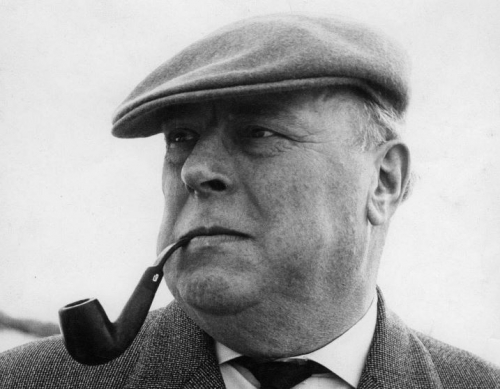
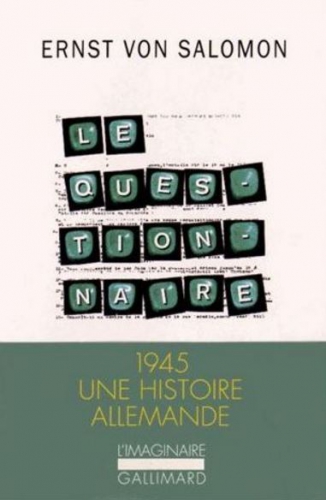 L’architecture générale du livre s’appuie sur les quelques 130 questions auxquelles les Américains demandèrent aux Allemands de répondre en 1945 afin d’organiser la dénazification du pays, mais en les détournant souvent et prenant à de nombreuses reprises le contre-pied des attentes des vainqueurs. A bien des égards, le livre est ainsi non seulement à contre-courant de la doxa habituelle, mais camoufle également bien des aspects d’une réalité que l’Allemagne de la fin des années 1940 refusait de reconnaître : « Ma conscience devenue très sensible me fait craindre de participer à un acte capable, dans ces circonstances incontrôlables, de nuire sur l’ordre de puissances étrangères à un pays et à un peuple dont je suis irrévocablement ». Certaines questions font l’objet de longs développements, mais presque systématiquement un humour grinçant y est présent, comme lorsqu’il s’agit simplement d’indiquer son lieu de naissance : « Je découvre avec étonnement que, grâce à mon lieu de naissance (Kiel), je peux me considérer comme un homme nordique, et l’idée qu’en comparaison avec ma situation les New-Yorkais doivent passer pour des Méridionaux pleins de tempérament m’amuse beaucoup ». Et à la même question, à propos des manifestations des SA dans la ville avant la prise du pouvoir par les nazis : « Certes, la couleur de leurs uniformes était affreuse, mais on ne regarde pas l’habit d’un homme, on regarde son coeur. On ne savait pas au juste ce que ces gens-là voulaient. Du moins semblaient-ils le vouloir avec fermeté … Ils avaient de l’élan, on était bien obligé de le reconnaître, et ils étaient merveilleusement organisés. Voilà ce qu’il nous fallait : élan et organisation ». Au fil des pages, il revient à plusieurs reprises sur son attachement à la Prusse traditionnelle, retrace l’histoire de sa famille, développe ses relations compliquées avec les religions et les Eglises, évoque des liens avec de nombreuses personnes juives (dont sa femme), donne de longues précisions sur ses motivations à l’époque de l’assassinat de Rathenau, sur son procès ultérieur et sur son séjour en prison. Suivant le fil des questions posées, il détaille son éducation, son cursus scolaire, son engagement dans les mouvements subversifs « secrets », retrace ses activités professionnelles successives avec un détachement qui parfois peu surprendre mais correspond à l’humour un peu grinçant qui irrigue le texte, comme lorsqu’il parle de son éditeur et ami Rowohlt. Il revient bien sûr longuement sur les corps francs entre 1919 et 1923, sur l’impossibilité à laquelle il se heurte au début de la Seconde guerre mondiale pour faire accepter son engagement volontaire, tout en racontant qu’il avait obtenu en 1919 la plus haute de ses neuf décorations en ayant rapporté à son commandant… « un pot de crème fraîche. Il avait tellement envie de manger un poulet à la crème ! ». Toujours ce côté décalé, ce deuxième degré que les Américains n’ont probablement pas compris. La première rencontre avec Hitler, le putsch de 1923, la place des élites bavaroises et leurs rapports avec l’armée de von Seeckt, la propagande électorale à la fin des années 1920, et après l’arrivée au pouvoir du NSDAP les actions (et les doutes) des associations d’anciens combattants et de la SA, sont autant de thèmes abordés au fil des pages, toujours en se présentant et en montrant la situation de l’époque avec détachement, presque éloignement, tout en étant semble-t-il hostile sur le fond et désabusé dans la forme. Les propos qu’il tient au sujet de la nuit des longs couteaux sont parfois étonnants, mais finalement « dans ces circonstances, chaque acte est un crime, la seule chose qui nous reste est l’inaction. C’est en tout cas la seule attitude décente ». Ce n’est finalement qu’en 1944 qu’il lui est demandé de prêter serment au Führer dans le cadre de la montée en puissance du Volkssturm, mais « l’homme qui me demandait le serment exigeait de moi que je défende la patrie. Mais je savais que ce même homme jugeait le peuple allemand indigne de survivre à sa défaite ». Conclusion : défendre la patrie « ne pouvait signifier autre chose que de la préserver de la destruction ». Toujours les paradoxes. Dans la dernière partie, le comportement des Américains vainqueurs est souvent présenté de manière négative, évoque les difficultés quotidiennes dans son petit village de haute Bavière : une façon de presque renvoyer dos-à-dos imbécilité nazie et bêtise alliée… et donc de s’exonérer soi-même.
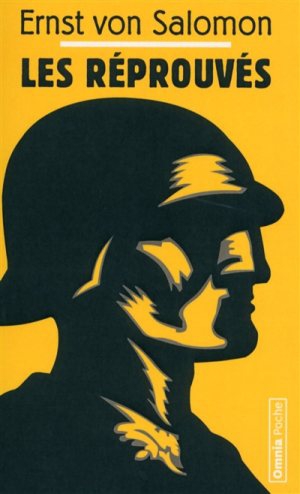 Les Réprouvés s’ouvre sur une citation de Franz Schauweker : « Dans la vie, le sang et la connaissance doivent coïncider. Alors surgit l’esprit. » Là est toute la leçon de l’œuvre, qui oppose connaissance et expérience et finit par découvrir que ces deux opposés s’attirent inévitablement. Une question se pose alors : faut-il laisser ces deux attractions s’annuler, se percuter, se détruire et avec elles celui qui les éprouve ; ou bien faut-il résoudre la tension dans la création et la réflexion.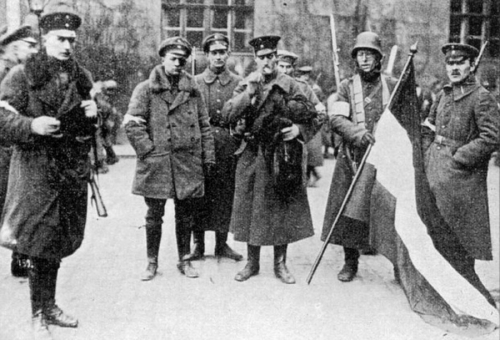
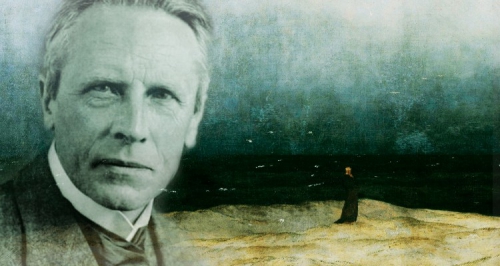
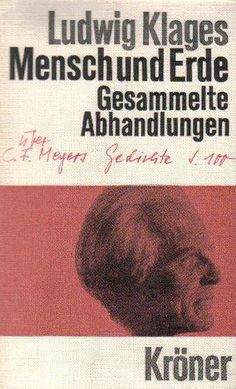 Klages does not think highly of most psychology. It is based on misunderstandings, it has limited possibilities to describe personalities, and it is not a science of the soul. This means that modern psychology and older wisdom about the soul are strangers to each other. Klages does connect to such wisdom. Among other things, he is interested in the psychological insights of folk-language. People are “seeing red”, they get “high” or “carried away”, and become “blue”. Klages is interesting to read when he studies this area.

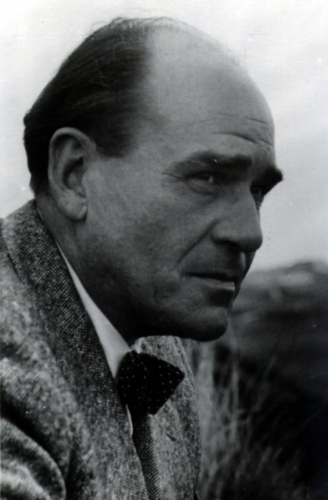 Had Zehrer de Machtergreifung van Hitler kunnen verhinderen? Misschien niet met de pen, maar wel met de wapens van een regerende generaal?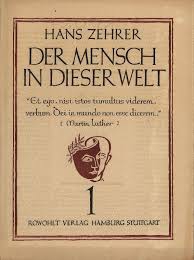
 'Die Tat' mocht dan wel met haar strijd tegen Weimar, tegen Versailles, tegen het parlementarisme en voor een elitair bestuurde natiestaat en een 'Duits socialisme' geestelijk mee het pad hebben geëffend voor de machtsovername door de nationaalsocialisten, dezen vergaten nooit wie tijdens de tocht naar de top aan hun kant had gestaan en wie niet. Enkele weken na de Machtergreifung werd Zehrer gedwongen de leiding over 'Die Tat' af te staan. Hij trok zich in de komende jaren terug op het eiland Sylt, ver weg van Berlijn, uit het vizier van de nationaalsocialisten. Zijn joodse echtgenote emigreerde in 1938 naar Groot-Brittannië. Zehrer werkte in de beginjaren van de oorlog nog als zaakvoerder van de uitgeverij Stalling en diende van 1943 tot 1945 bij de staf van de Luftwaffe. Na de oorlog werd Zehrer hoofdredacteur van 'Die Welt', de krant die door de Britse bezettingsmacht in Hamburg was opgericht. Duitse sociaaldemocraten protesteerden hiertegen omdat ze de strijd van Zehrer tegen de Weimarrepubliek niet waren vergeten. Zehrer moest opstappen en schreef tot 1953 voor andere dagbladen. Toen de bekende uitgever Axel Springer, een goede vriend, in 1953 'Die Welt' kocht, kon Zehrer weer aan de slag, en wel als hoofdredacteur bij deze krant, die nog altijd een van de vlaggenschepen van de Bondsrepubliek is.[iv]
 But the reborn Islamic fury, much pondered in the West, is not the necessary outcome of Islam’s doctrines. That the Middle East is still populated by “Muslims” is of less consequence than its stage of historical development. Islam is in winter. For centuries following the Crusades the Arabs and Persians were inactive. Islam’s last great conquests were not carried out by these “core-Magians,” but by the Berbers, Turks, and Mughals. And these imperial peoples could only prolong the agony of Magian decline. After c. 1500, the Magians had no meaningful history. They have endured wars and changes of dynasty, but no revolutions of thought or spirit. Classic histories of Middle East recognized this historical void--in over 750 pages of The History of the Arabs, the Lebanese Christian scholar Philip Hitti devoted less than 100 to anything after the 13th century.
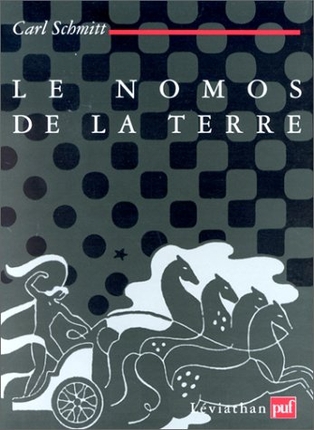 Cette vision d’un enracinement de fait et a priori de l’ordre semble évacuer la posture relativiste consistant à croire que ce sont les États et les nations qui plongent de force, à grands coups d’artifices, de symboles et de discours enflammés, un ordre qu’ils créent de toutes pièces dans le sol qu’ils dominent. Comme si l’enracinement se décrétait, comme s’il s’agissait de donner les attributs d’une force naturelle et le visage rassurant d’un mythe fondateur visant à unir un peuple à sa terre de façon quasi-mystique. Carl Schmitt met en échec ceux qui aujourd’hui encore voudraient voir en la notion d’un enracinement garant de l’ordre une pure abstraction romantique sans prise avec le réel, un outil superflu et ringard à dispositions des politiques, voire un mythe «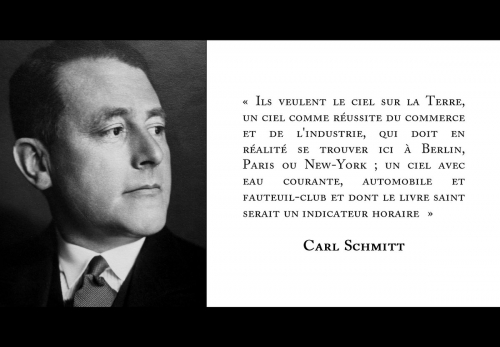

 Se ci fermiamo un attimo a riflettere su quale sia il gesto che, durante una nostra comune giornata, ripetiamo il maggior numero di volte, riconosceremo presto che si tratta del gesto di guardare l’orologio. Un gesto così scontato, ormai istintivo, che quasi come una funzione fisiologica accompagna la nostra esistenza, che ci appare impossibile immaginare una vita senza orologio. Il tempo, pensiamo giustamente, è il giudice supremo ed impietoso della nostra vita: come potremmo vivere senza misurarlo, senza tenerlo costantemente sotto controllo? E quale strumento migliore che i nostri orologi sempre più precisi e sofisticati?




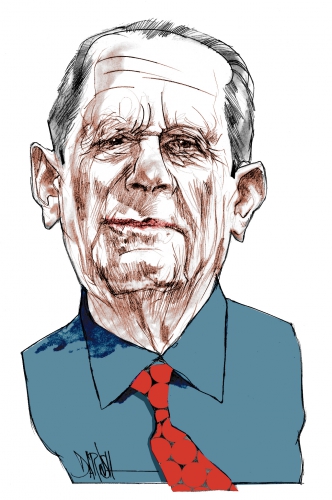 Nel 1945 il grande industriale tedesco Friedrick Flick, che aveva fondate ragioni di credere di venire accusato dagli alleati per la collaborazione a guerra d’aggressione, richiese a Carl Schmitt un parere per la difesa da tale (eventuale) accusa. Accusa che non venne mai mossa a Flick, il quale fu tuttavia condannato per un “capo d’imputazione” diverso: lo sfruttamento di manodopera straniera deportata dalle S.S..
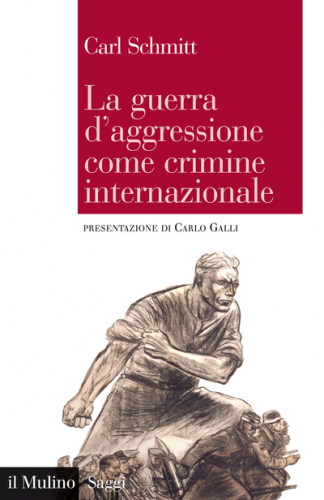 Schmitt valuta queste tre classi alla luce sia del “politico” che dei principi dello jus publicum europaeum. In primo luogo se la guerra è, nel sistema westphaliano, non solo un fatto pubblico ma che presuppone la distinzione tra pubblico e privato, allora non può farsi carico a un privato (come Flick) di aver concorso ad una guerra di aggressione.
 Schmitt è stato uno dei maggiori interpreti della crisi del XX secolo; la sua peculiare concezione del diritto ha fatto si che lui, giurista come si considerò sempre fino alla morte – ma come tutti i grandi giuristi portatore di una visione che trascende il mero orizzonte giuridico – sia stato in Italia apprezzato prevalentemente come politologo e filosofo della politica.
 In particolare il potere costituente ha generato una prassi per il cambiamento di costituzione: “ogni rivoluzionario di professione ha imparato a maneggiarle: si destituisce il governo legale esistente, si convoca un «governo provvisorio» e si indice un’assemblea nazionale costituente… attraverso rivoluzioni grandi e piccole, europee e non europee, è sorta nell’arco di due secoli una prassi legittimante nella legalizzazione del colpo di stato e delle rivoluzioni”. Tuttavia è “difficile immaginare il trasferimento di un potere costituente dalla nazione all’umanità…L’organizzazione attuale della pace mondiale non è utile solo all’unità, ma anche allo status quo dei suoi numerosi membri sovrani. Dovremmo forse prospettarci un’assemblea plenaria dell’ONU p almeno una seduta del Consiglio di sicurezza che si svolga similmente a quella della notte del 4 agosto 1789, in cui i privilegiati rinunciarono festosamente a tutti i loro privilegi feudali?”.
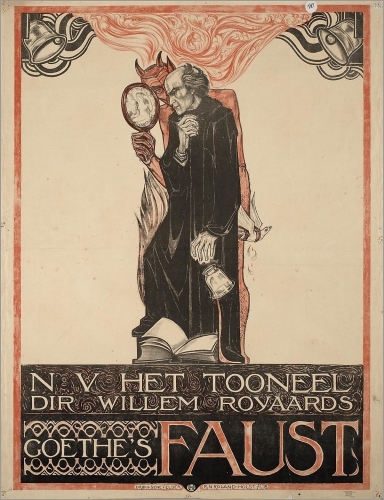 Onze cultuur, de cultuur van het Avondland, ziet Spengler als 'Faustisch', naar het toneelstuk 'Faust' van Goethe. Het idee is dat de mens van onze cultuur streeft naar onbeperkte kennis, zelfs als hij daarvoor – net als Faust – een pact met de duivel moet sluiten. Als poëtisch beeld voor deze cultuur geeft Spengler “de oneindige ruimte”. Het ruimtevaartprogramma zou hij als een typerende cultuuruiting van het Avondland zien.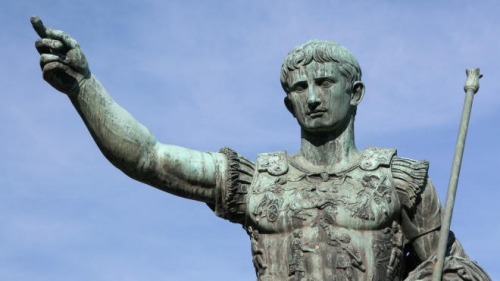
 According to this matrix, our Caesarism period of 2000-2200 corresponds to 100 BC – 100 AD in Classical civilization. The post-2200 era corresponds to the Roman Empire from Trajan onwards. Here civilization has attained its peak, while cultural forms are completed, calcified, past evolution. This, you might say, is the true End of History—for our Western, Faustian civilization at least. But we have a way to go.
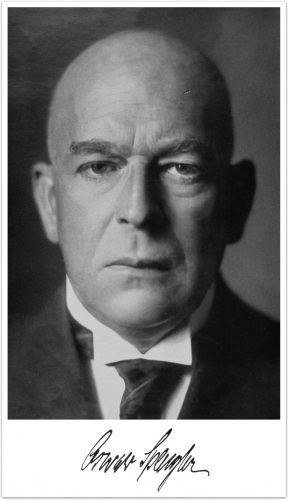 Anyway, when Time reviewed Man and Technics a few years later, the bloom was off the rose. In an about-face from 1926, Time now declared Spengler a pessimist, one who thinks Civilization is done for. This time around, the reviewer dismissed his work with lip-smacking sarcasm:
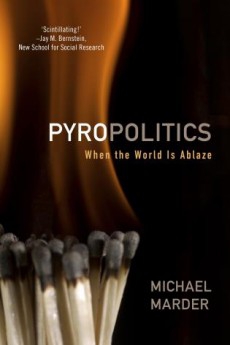
 Le livre récent de Christian E. Roques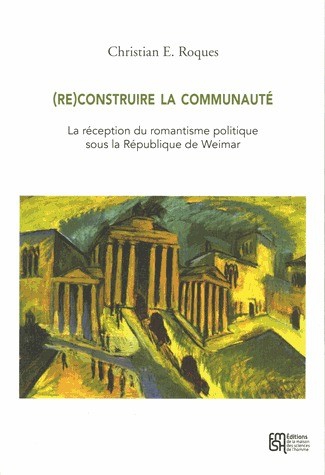

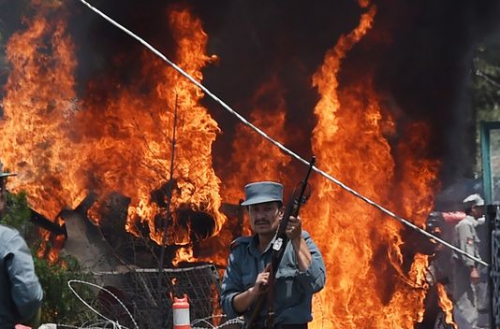
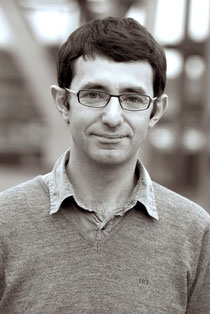
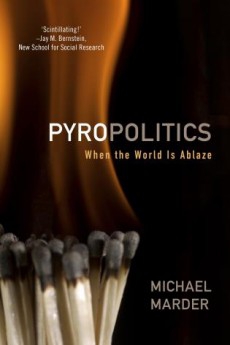 Qu’entendent les quelques politologues contemporains par « pyropolitique », concept qui vient d’être formé, notamment par le Professeur Michael Marder (cf. infra) ? Pour comprendre le contexte dans lequel ce vocable nouveau a émergé, il convient d’explorer deux domaines particuliers, exploration qui nous permettra de cerner le contenu même de la pyropolitique : le premier de ces domaines est celui de la théologie politique, avec, notamment, les réflexions de Juan Donoso Cortès sur le libéralisme, le socialisme et le catholicisme (posé, dans son œuvre, comme la « Tradition » à l’état pur) ; il faudra aussi, en explorant ce domaine de la théologie politique, relire les textes où Carl Schmitt affirme que tout concept politique moderne recèle en lui-même, quelque part, une racine théologique ; deuxième domaine à explorer dans l’œuvre politologique de Carl Schmitt : le corpus dans lequel le juriste de Plettenberg pose les confrontations du monde contemporain comme un choc permanent entre forces élémentaires brutes, de pré-socratique mémoire, en l’occurrence l’affrontement entre l’élément Terre et l’élément Eau. Toute expression réelle du politique (« das Politische ») étant, dans cette optique, une expression du facteur élémentaire « Terre », le politique en soi ne pouvant avoir qu’un ancrage tellurique, continental. Le véritable homme politique est alors une sorte de géomètre romain, explique Carl Schmitt dans son Glossarium publié après sa mort. Un géomètre qui mesure et organise le territoire qui tombe sous sa juridiction.
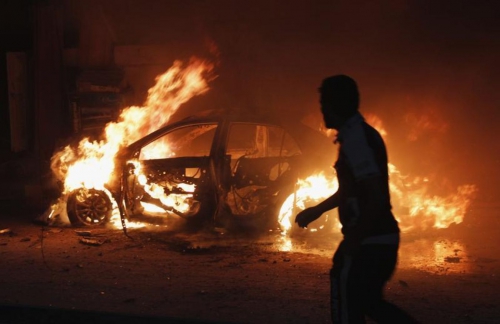
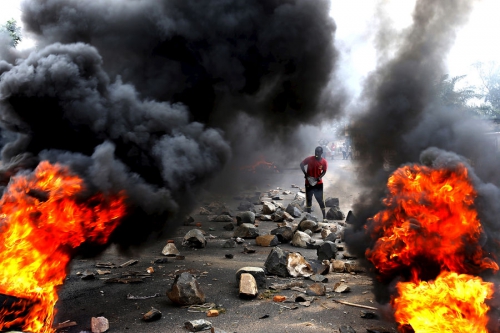
 Cependant, même si la Terre est aujourd’hui un élément dominé, houspillé, cela ne veut pas dire qu’elle cesse d’exister, de constituer un facteur toujours potentiellement virulent : elle est simplement profondément blessée, elle gémit dans une hibernation forcée. Les forces hydropolitiques cherchent à détruire par tous moyens possibles cette terre qui ne cesse de résister. Pour parvenir à cette fin, l’hydropolitique cherchera à provoquer des explosions sur les lambeaux de continent toujours résistants ou même simplement survivants. L’hydropolitique thalassocratique va alors chercher à mobiliser à son profit l’élément Feu comme allié, un Feu qu’elle ne va pas manier directement mais confier à des forces mercenaires, recrutées secrètement dans des pays ou des zones urbaines en déréliction, disposant d’une jeunesse masculine surabondante et sans emplois utiles. Ces forces mercenaires seront en charge des sales boulots de destruction pure, de destruction de tout se qui ne s’était pas encore laissé submerger.
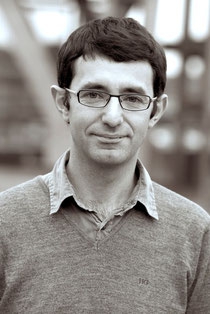
 Lectures complémentaires (articles du Prof. Michael Marder):

 What do political scientists mean when they talk about “pyropolitics”? There are two sources to explore in order to understand what they mean; first, you’ll have the whole realm of political theology to investigate, including Donoso Cortés’ thoughts about liberalism, socialism and Catholicism (this last being perceived as Tradition as such) and of course you’ll have to study thoroughly the core idea of Carl Schmitt, having proved that all political ideas have a theological background; second, you’ll have to take into consideration Schmitt’s perception of world politics as a clash between raw elements such as Earth and Water. Real politics, called in his genuine German as “das Politische,” is necessarily Earth-bound, continental and the truly efficient political man is a kind of Roman geometer who organizes the territory coming under his jurisdiction, by simply measuring it.
 ISIS’ pyropolitics has as a collateral effect to ridicule the “light-without-warmth” Enlightenment ideologies of the Eurocratic elites. Light alone blinds and doesn’t produce genuine solutions for new problems that were induced by the disguised foe’s hydro- and pyropolitics. A blinding political ideology determined by light alone — that is also bereft of any “warmth-giving” feelings of security — is obviously bound to fail. European states become gradually failed states because they keep to “light-only-ideologies,” being only weakly challenged by so-called “warmth-demanding” populist movements. Europe is now undergoing a double aggression under two threats: the one of “light-without-warmth” ideological systems – leading to what Ernst Jünger defined as “post-history” — and the one of imported pyropolitics from the Muslim world formerly set ablaze by several factors, among which the total destruction of Saddam’s Iraq is the most important. ISIS’s pyropolitics aims at setting ablaze the Western European countries held erroneously responsible for the complete collapse of Near- and Middle Eastern countries. ISIS’ pyropolitics is nevertheless a quite complex problem: the religious element in it rebels savagely against the “light-only” all determining Western and global dominant ideology and promotes a pyropolitical “warmth-based” alternative exactly like a European counterpart of it would also aim at replacing the old-fashioned and bleak “light-only” ideological nuisances by more open-hearted and warmer political systems. The neoliberal avatar of the “light-only” ideology should therefore be replaced by a “warmth-giving” solidarism, i.e., a socialism that should have lost all the “coldness” that was attributed to Soviet or French communism by Kostas Papaioannou, a voice of Communist internal criticism in the ’60s and ’70s in France.
 JB: Yes, I think that’s a good way in. Spengler is a cosmologist of history. He’s a botanist of history, in a way. He sees human cultures and their attendant civilizations very much like geological strata or the morphology of plant life in that they have a natural cycle, even a diurnal, seasonal one. They have a brief flowering and they have a spring, they have a summer, they have an autumnal phase, and then they have a winter of the soul, and then they die. They literally atrophy and die. His belief in the death of great cultures, that cultures could be seen to come to an end, or they can lie silent for enormously long periods prior to some renaissance or kickstart, is deeply troubling to the modern mind which is addicted to the idea of progress and progressivism whatever its standpoint.
 RS: Before we talk a little bit more about Germany in his time, actually, I think it would be good to lay out some of the basic terms of Spengler’s history. He talked about a series of great or high cultures and these included the Magian culture, which I guess is the Semitic culture, and the Apollonian of Classical culture, and then Western-American culture, which he described as quintessentially Faustian in nature.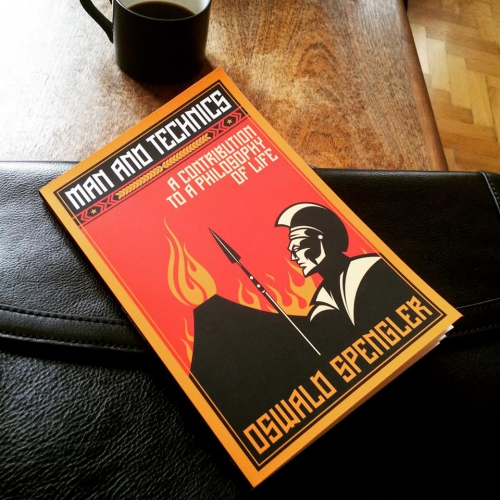
 RS: So, Jonathan, what kind of ideas did Spengler have for the future and did he see the rise of a new civilization?